A colourful mosaic sign reading 'You belong' among green plants

Advocacy

Amplifying neurodivergent voices, and working towards systems that are more understanding, accessible, and humane.

Our advocacy is informed by lived experience, community collaboration, and a commitment to neuroaffirming practice. We focus on challenging harmful narratives, influencing policy and practice, and supporting change across education, health, and wider society.

School Supports

We work with schools, SNAs/ANAs, and education professionals to develop more neuroaffirmative, regulation-first approaches to teaching and supporting neurodivergent students.

Resources & Submissions

Our policy reports and submissions. Tap a document to read it here, or download a copy.

Twenty Years of the Convention on the Rights of Persons with Disabilities

NDI's submission to the UN Office of the High Commissioner for Human Rights, for its annual thematic study marking twenty years of the Convention, prepared pursuant to Human Rights Council resolution 61/9. Twenty years on, Ireland's ratification and reporting compliance have advanced steadily while domestic commencement, enforceable individual remedies and disaggregated data have not.

Nessa Hill, CEO, Neurodiversity Ireland, 26 August 2026

OHCHR call for input, closes 1 September 2026

Make your own submission

Press release: NDI calls for a pause on prosecutions of parents

Our 18 August letter to the Minister for Education and Youth, calling for prosecutions of parents by TESS to pause until a disability assessment has been carried out for the child. Sets out the three failures aligning in the system, the attendance figures that are still not broken down by disability, and NDI's own finding that 90.8% of the children experiencing non-attendance in our November 2025 survey were neurodivergent.

Neurodiversity Ireland, 18 August 2026

NDI Response to the EPSEN Implementation Plan

NDI's formal response to the Department of Education and Youth's implementation plan for the review of the EPSEN Act 2004. Welcomes the plan's ambition after twenty-two years, but judges it against the children currently living without inclusive education - and sets out nine concrete asks, from an interim package for children out of school now to attendance data published by disability status.

Neurodiversity Ireland, August 2026

Myths About School Attendance

What the evidence actually shows, for schools and parents. Four common myths about school attendance, each answered with the research and with the words of young people and parents themselves - and NDI's clinical position: non-attendance in neurodivergent children is communication of nervous system dysregulation, not choice, not irrational anxiety, and not a parenting failure.

Neurodiversity Ireland - PDA Parenting in Ireland series, August 2026

Pre-Budget Submission 2027

NDI's formal submission to the Government ahead of the Summer Economic Statement. Twelve asks covering education, disability services, children's services, and rights-based planning. Approximately 170,000 children with invisible additional educational needs are excluded from current policy planning.

Neurodiversity Ireland, July 2026

Comments on the UN CRPD List of Issues: Ireland

NDI's comments to the Department of Children, Disability and Equality on the UN CRPD Committee's List of Issues for Ireland. Covers disabled children, women and girls, education, health and therapy services, and data. Sets out how Ireland plans services for a generation of children it has not properly counted: the State's planning baseline for additional educational need is a 2011 estimate of 25%, roughly half the comparable Scottish figure of 43%.

Neurodiversity Ireland, July 2026

Roscommon School Refusal Resource Pack

A clinical analysis of the Roscommon School Refusal Resource Pack (March 2018 and revised July 2020), written from a neuroaffirming, trauma-informed, PDA-informed and sensory-informed occupational therapy perspective, with specific consideration of neurodivergent burnout and nervous system safety.

Sorcha Rice, Senior Occupational Therapist, Clinical Manager at Neurodiversity Ireland and AuDHD PDA'er.

When “Nervous System Alignment” Becomes a Sales Pitch

Chiropractic marketing increasingly claims that “nervous system misalignment” causes a wide range of physical, emotional, and developmental challenges, including autism and ADHD. This evidence-informed deep dive unpacks what those claims actually mean, examines the science behind “subluxation” theory, and explains why framing neurodivergence as a structural blockage is both unsupported and potentially harmful.

INTO: Autism Class Teacher Trainings

Supports autism class teachers to move toward a regulation-first, child-led, neuroaffirmative approach to teaching and learning. Reframes behaviour as communication and stress response rather than non-compliance. Highlights how child-led play, interests, and sensory-aware environments provide meaningful access to the curriculum.

Analysis of the TESS School Attendance Campaign

A submission in response to the Tusla Education Support Service Five Year Plan for School Attendance 2023-2028. Critically examines the conceptual framework underpinning current attendance policy and highlights areas where the plan risks causing harm to neurodivergent children.
Neurodiversity & PDA: What Parents Want Their GP to Know

A short guide informed by lived experience of neurodivergent children, adults and families, written to support safe, effective GP care for patients with a PDA (Persistent Drive for Autonomy) profile and other neurodivergent presentations. Grounded in belief, predictability, regulation, and respect, so that neurodivergent people can access medical care without fear, trauma, or exclusion.

Sorcha Rice, Clinical Manager and Senior Occupational Therapist at Neurodiversity Ireland and AuDHD PDA'er.

A Rights-Based Approach to Education

Argues that Ireland is failing to uphold children's fundamental rights to an inclusive education, particularly for those with additional educational needs. Key legislation (like EPSEN) has not been fully implemented, leaving rights unenforceable in practice.

Language & Values Guide

NDI's guide to affirming, respectful language around neurodivergence. Explains why language matters, offers practical alternatives to deficit-based terms, and emphasises that affirming language is part of broader systemic change - helping create environments and systems that truly value and include all neurologies.

Neurodiversity Ireland, January 2026

Critical Review - Assessment of Need

Why Ireland's Assessment of Need process breaches children's rights, and what a lawful, clinically-led, neuroaffirmative model would look like. A detailed policy report on the legal and clinical failings of the current AON model, and a rights-based alternative.

Nessa Hill, CEO and Sorcha Rice, Senior Occupational Therapist and Clinical Manager, December 2025

NCSE Relate Framework

NCSE Relate is a regulation-first, neuroaffirmative framework developed by the National Council for Special Education to support student engagement, participation, and wellbeing in schools. Reframes behaviour as communication and stress response. Emphasises co-regulation, unconditional positive regard, student voice, and universal design for learning.

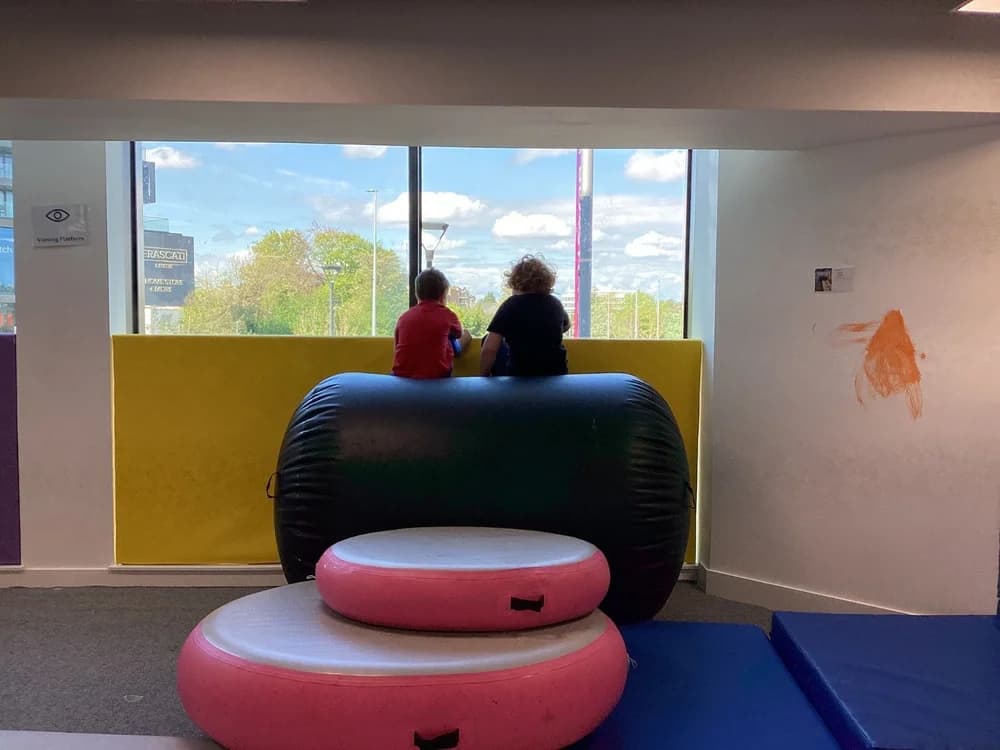
Two children in the NDI sensory play space

Every child deserves to be understood, not managed.

Want to collaborate on advocacy or share your experience? We would love to hear from you.

Get in touch

Proud members & partners

Disability Federation of IrelandChildren's Rights Alliance memberProgress Pride flag - we are LGBTQ+ inclusive