Embracing the Language of Neurodiversity
A Guide to Inclusive Language and Values. Updated September 2026, incorporating current preferred terms.
Neurodiversity Ireland, September 2026
PDF, 11 pages, 480 KB
Embracing the Language of Neurodiversity: A Guide to Inclusive Language and Values
Updated September 2026, incorporating current preferred terms
“Do the best you can until you know better. Then when you know better, do better.”
Neurodiversity describes the differences in the way that brains work. There is no ‘correct’ way for the brain to work; instead, there is a wide range of ways that people perceive and respond to the world.
The term ‘neurodiversity’ was coined to help fight the stigma faced by neurodivergent individuals. It is a movement (a human rights, social and disability movement) that focuses upon developing individual strengths and recognising that everyone has a unique brain and therefore different needs and abilities.
Language plays a crucial role in shaping perceptions and attitudes towards neurodiversity. This guide is designed to help foster respect and appreciation for neurodivergent individuals. By embracing neuro-affirmative language, we can create an environment that is more inclusive of every brain type.
Moving away from an approach which talks about deficits or impairments and instead, recognising and respecting evolving neurodivergent culture and identities, supporting needs and challenges and not pathologising neurodivergent ways of being.
As language around neurodiversity continues to evolve, it is important to recognise the dynamic nature of how individuals and communities choose to identify. Establishing how individuals prefer to describe themselves is essential in honouring their identities and lived experiences. This guide emphasises the importance of using language that respects and affirms neurodivergent individuals’ self-identification. It acknowledges that terminology may vary among individuals and communities, and encourages open communication to establish preferred language. This guide is committed to staying up to date, to reflect neuro-affirming language and values, ensuring inclusivity and respect for all.
There is inherent value in diversity in and of itself. We need all kinds of people and minds in order to flourish as worldwide societies. Being neurodiversity affirmative is to see and celebrate the value of this diversity.
To see the value in disability and living a disabled life requires examining how our views on disability are inextricably tied to capitalist ideals of being ‘productive’ and ‘independent’ (that is, needing no outside help or support so as not to cost the ‘system’ money). It is a person’s right to choose if they identify as disabled, and disability is not a “dirty” word. Many disabled people will need ongoing support from others throughout their lives and may never have a paid job, but this does not mean they do not live a rich, valuable and meaningful life.
Being neurodiversity affirmative means that all neurodivergent people, no matter how high their support needs are, or how they communicate, have an equal voice and agency in relation to their own lives and communities. The neurodiversity movement was born out of the wider disability movement and has always (and continues to) encompass, embrace and advocate for the voices of all disabled people.
Identity-first language, such as “autistic person,” recognises neurodiversity as an inherent aspect of an individual’s identity. The majority of neurodivergent people prefer this approach for its affirming nature, acknowledging the integral connection between their identity and lived experiences.
Respecting individual preferences is crucial, recognising that most may prefer identity-first language while others favour person-first language. It involves honouring each person’s choice regarding how they wish to be described in relation to neurodivergent identity.
We acknowledge that the terms neurodiversity and neurodivergent are framed in ways that hold both similarities and differences between different theories of knowledge, such as disability studies, critical autism studies, and neuroqueer theory, and allow space for understandings that differ from our own.
The neurodivergent experience is a valid, different neurotype. We do not need to classify people using a standard of “normality” or “typicality.” The medical model of disability and all classification systems arising from this model (for example, the DSM-5-TR diagnostic criteria) are inherently based on “neuro-normative” assumptions.
Being neurodiversity affirmative does not just mean changing your language to be more respectful of the community, but making systemic changes across workplaces, healthcare systems, communities, and society so that neurodivergent people have the equal rights they deserve. This requires community allies as well as advocates. It is a basic human right to have a voice and a ‘place at the table’ in equal decision-making about community needs, and diversifying teams in this way also leads to better care and support.
Emphasise the strengths and abilities of neurodivergent individuals, celebrating their unique perspectives and contributions to society. Recognising and highlighting strengths fosters a positive narrative around neurodiversity, promoting acceptance and inclusion.
Recognise the diversity within the neurodivergent community, avoiding assumptions or generalisations based on stereotypes. Asking about and acknowledging individual differences and experiences promotes inclusivity and respect.
Using inclusive language respects all neurodivergent identities and acknowledges intersectionality with other aspects of identity. Prioritising preferred terminology, avoiding ableist language, and promoting accessibility create a welcoming environment for all.
Listening to the experiences and perspectives of neurodivergent individuals broadens understanding and promotes empathy. Learning from their insights fosters meaningful connections and supports inclusive practices.
Avoid framing neurodiversity solely as a disorder or deficit, recognising it as a natural variation of human neurology with both strengths and challenges. Using affirming language promotes acceptance, encourages supports, and celebrates diversity, which brings inclusion.
Behaviour-based compliance approaches are fully rejected by the autistic community and the neurodiversity paradigm, in part as they share their origins with gay conversion therapy. Ultimately the end goal of Applied Behaviour Analysis is an autistic child (or adult) who is ‘indistinguishable’ from their neurodivergent peers. Compliance-based behavioural methods (including Positive Behaviour Support, or PBS, and ABA) have been shown to have significant, negative, long-term effects on people’s mental health.
Compliance-based behaviour methods are ineffective, increasingly showing links between masking (promoted by social skills training) and poor mental health, self-harm and suicide. These approaches place barriers to connection, prevent full exploration of neurodivergent identity and finding a way to be neurodivergent in the world, instead encouraging concealment of a crucial element of the self, increasing loneliness and isolation. This leads to feelings of rejection, hurt and devaluation.
Several neurodiversity-affirming psychologists¹, in encouraging fellow clinicians to move towards neuro-affirmative practice, write that “neuro-affirmative practice is a process of ever-becoming: you will never arrive.” We should always learn from the community, ever exploring our own knowledge. “Do not make neuronormative or heteronormative assumptions… Strive for cultural humility. Show yourself compassion as you unlearn, re-learn, and ever move forward. Learning is an ever-looping process of becoming, it is not linear. Welcome this.”
As our understanding deepens, some widely used terms no longer fit our values. Here is language we have moved away from, and why.
These describe an approach in terms of what adults reduce or withhold from the person (arousal, demands), which keeps the framing centred on adult management rather than the autistic person’s own autonomy and consent. Even when well-intentioned, this echoes behaviour-based, compliance-oriented language. We describe the actual practice instead, for example “collaborative, autonomy-led support” or, reducing pressure or “adjusting expectations in partnership with the person.”
This locates dysregulation as an individual emotional failing to be corrected and narrows it to emotions alone. Emotions are natural and important reactions to our surroundings and experiences. Dysregulation is a whole nervous system and sensory response to an environment not built for the person, and it often needs co-regulation with a trusted other, not just self-management. We use “regulation,” “co-regulation,” or “dysregulated / dysregulation” instead.
There is no fixed “neurotypical” brain to contrast against. What looks typical simply reflects whose needs are already being met by their environment; anyone whose needs go unmet will diverge from that norm, whether or not they are neurodivergent. We use “neuronormative” to name the constructed standard itself, rather than presenting it as a real, fixed type of person. See the Terms and Concepts section for the full definition.
This table sets out the preferred language for the most commonly used and most commonly misused terms in this guide. It is not exhaustive; refer to the Terms and Concepts section above for fuller definitions.
We do not use ASD or ASD Unit — read on to find out why.
| Preferred Language | Language to Avoid | Why is it Preferred? |
|---|---|---|
| Identity First Language: Autistic Individual | Person First Language: Person with Autism | Emphasises autism as an integral part of a person’s identity. Individuals may prefer to identify with their neurodivergence. Respects the neurotype and avoids framing autism as a disorder or “condition.” Some neurodivergent people differ in their language preference; acknowledging each individual’s preferred language is respectful toward their identity and lived experience. |
| Autistic, Autism | Has Autism, Has Asperger’s, Asperger’s Syndrome, On the Spectrum, With Autism, AS/ASD, Autism Spectrum Disorder, Autism Spectrum, ASC, Suffers from Autism, Classic Autistic | Moves away from the view that autism is a disorder that someone “has,” towards respecting different neurotypes. Asperger’s is no longer an official clinical diagnosis. The term derived from the work of Hans Asperger, a psychiatrist who worked with the Nazis and employed abhorrent descriptions of autistic children. |
| Classroom | Autism Class, ASD Unit, Autism Unit, Unit | Children and adults, regardless of neurotype, are taught in classrooms, not units. There is no requirement for a school to use the DSM-5 term “ASD.” Avoid abbreviations that dehumanise. |
| Disability, Difference | Disorder | Disability is not a ‘dirty’ word. People should be free to choose to declare themselves disabled, receive the support they need, and not be shamed for doing so. “Disorder” suggests something is inherently wrong or dysfunctional about a person. |
| Differences, Challenges, Needs | Deficits, Impairment | Highlights the uniqueness of neurodivergent individuals without framing their challenges or characteristics as deficits. Recognises that diverse ways of thinking and experiencing the world contribute to the richness of human diversity, and that there are disabling environments and barriers arising from neuronormative systems and practices. |
| Individuals with Specific Support Requirements, Diverse Needs, a Disability; Disabled Person; Neurodivergent; Higher Support Needs | Special Needs, Special (for example, special education or special class) | The phrase “special needs” can cause harm: it increases stigma by framing accommodations as “special” rather than a right, it can infantilise, and it fosters segregation. Needs and rights are not extra or special, but derive from the same fundamental civil rights of all people. |
| Autistic or Neurodivergent Development Trajectory | Regression, Missing Milestones, Developmental Delay, Problematic Development, Developmental Difficulties, “Has the Mental Age of…,” “Acts Like an X Year Old” | Acknowledges that neurodivergent individuals may follow unique paths of growth that are not predictable according to traditional perspectives, and that development is ongoing and multifaceted. “Regression” or missing milestones implies backward development, which can be stigmatising. |
| Support, Accommodations, Adjustments, adaptations | Treatment, Cures, Therapy to “Cure,” Interventions, Fix Autism, Cure Autism, Treat Autism | Emphasises the need to create environments that support and accommodate diverse needs and promote equitable participation, recognising neurodiversity as a natural aspect of human variation. “Treatment” or “cures” suggest a deficit-oriented, pathologising approach, implying neurodivergent individuals need fixing. |
| Non-speaking or minimally speaking, or speaks other than by using mouth words | Speaking at Times, Minimally Speaking, Non-verbal, Pre-verbal | Accurately describes individuals who primarily communicate through methods other than spoken language, such as sign language, gestures, or AAC, without suggesting they do not communicate at all. “Non-verbal” might wrongly imply a total lack of communication ability. |
| Characteristic | Symptoms, Signs, Impairments, Deficit, Difficulties Attributed to Being Autistic | Acknowledges that neurodiversity is an inherent aspect of an individual’s identity, personality or cognitive profile, and supports individual uniqueness. “Signs” or “symptoms” may imply a medicalised perspective, framing neurodiversity as a collection of problems to be treated or cured. |
| Neuronormative | Neurotypical, Normal | There is no fixed “neurotypical” brain or type of person to contrast against. What looks typical simply reflects whose needs are already being met by an environment; anyone whose needs go unmet will diverge from that norm. “Neuronormative” names the constructed standard itself, rather than presenting it as a real, fixed category of person. “Normal” additionally implies a standard or ideal that others deviate from, reinforcing stigma. |
| Intellectual Disability | Developmental Disability (used imprecisely), the R-word, Handicapped | Respects the dignity and humanity of individuals with cognitive differences. The R-word is deeply offensive and perpetuates hurtful stereotypes. “Handicapped” is outdated and focuses on limitations rather than abilities. |
| Sensory Processing Differences, Sensory Differences, Autistic Sensory Perception | Sensory Processing Disorder, Sensory Abnormalities | Each individual has a unique way of processing information and experiencing their environment. Differences in sensory experience are natural and should not be seen as deviations from a perceived norm. “Disorder” suggests something is inherently wrong. |
| Support Needs | High/Low Functioning, Mild/Severe | Recognises the individualised supports or accommodations required to address the unique strengths, challenges and preferences of neurodivergent individuals, avoiding functioning labels that oversimplify and stigmatise. |
| Dysregulated, Meltdown, Nervous System Distress | Disruptive, Bold, Behavioural Outburst, Challenging Behaviour, Behaviour of Concern, Tantrum, other critical terms | Accurately describes a state of imbalance in the central nervous system, or instability in emotional or sensory regulation, without stigmatising language. A meltdown signals nervous system distress. Critical terms may imply a lack of self-discipline or a chosen behaviour, reinforcing misconceptions. |
| Passion, Passionate, Hobby, Areas of Strength, Area of Expertise, Hyperfocus, Attention to Detail, Focused Interest | Obsessive, Obsessed, Special Interest, Rigid Interest, Repetitive Interest | Conveys the deep interest and strong focus a neurodivergent individual may have for a topic. “Obsessive” suggests an unhealthy fixation, disregarding the happiness and self-regulatory capacity the interest provides. “Special interest” implies something unusual about the hobby. |
| Authentic Communication, Connection | Social Skills (training) | Social skills training is fully rejected by the neurodiversity paradigm, where comparisons to the practice of gay conversion therapy are made. Like all behaviour-based models, it encourages neurodivergent people to mask their true selves, leading to internalised shame. It ignores Milton’s Double Empathy Problem: difficulties in communication are mutual, not located in the neurodivergent person alone. |
| World Autism Day, World Autism Month | Autism Acceptance Day, Autism Acceptance Month | Autistic people should not have to seek anyone’s ‘acceptance.’ Rather than placing the onus on autistic people to seek acceptance, we encourage non-autistic people to educate themselves on autism and on what supports autistic people might need to be included in communities. |
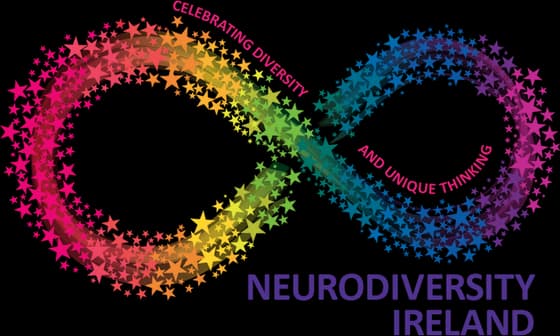
Rainbow infinity symbol
Promotes a positive and inclusive view of neurodivergence, challenging the notion that people are ‘puzzling’ or ‘broken’ and instead emphasising unique strengths and abilities. The rainbow signifies the diversity of experience within neurodiversity, and the infinity symbol represents the infinite potential of neurodivergent people.

Gold infinity symbol
Used by the autistic community, as the first two letters of ‘autism’ and ‘autistic’ are “Au,” the chemical symbol for gold.
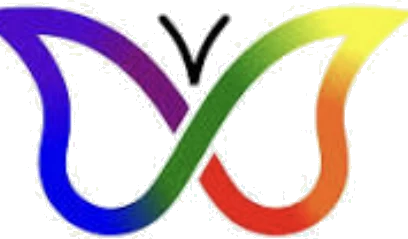
Butterfly symbol
Used to show the beauty of diversity; many feel it represents constant motion and how ADHD brains may flit between things.
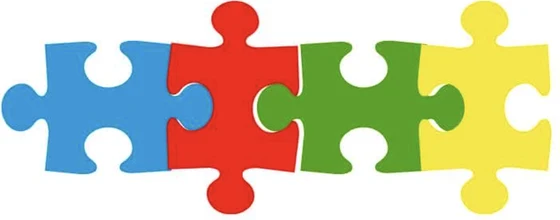
Puzzle pieces
Linked puzzle pieces are associated with the view that autistic people are ‘missing’ a piece of their puzzle and are a problem to be solved. This symbol objectifies and dehumanises. The use of primary colours also infantilises neurodivergent people, suggesting they remain child-like forever.
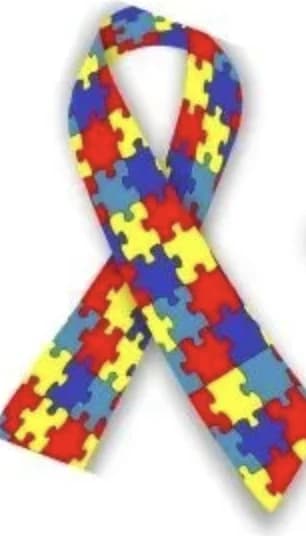
Puzzle ribbon
Introduced by the National Autistic Society in 1963 to reflect the “puzzling” nature of autism. The ribbon suggests autism is a disease that must be cured, reinforcing the same dehumanising ‘missing piece’ framing as the puzzle pieces above.
Autism Speaks branding / the colour blue
The blue puzzle-piece branding is considered to perpetuate the belief that autism relates to males only. This is harmful for autistic girls, who often go without diagnosis, and when diagnosed, may have their differences and needs ignored. The concept originated with Autism Speaks, an American organisation formed to find a “cure” for autism, including by funding research into genetics and eugenics.
Neurodiversity Ireland wants to change how Irish society views neurodivergence. We are asking you to unlearn, and re-learn, learn from the neurodivergent community, ever exploring your own, ever-looping knowledge.
Thank you for your continued support!
Results and Analysis of the Autistic Not Weird 2022 Autism Survey, opens in a new tabChris Bonnello, Autistic Not Weird
Neurodiversity Ireland, Language and Values Guide – RCN20206465
A Guide to Inclusive Language and Values. Updated September 2026, incorporating current preferred terms.
Neurodiversity Ireland, September 2026
PDF, 11 pages, 480 KB
Condensed from: Embracing the Language of Neurodiversity — A Guide to Inclusive Language and Values (March 2025).
Neurodiversity Ireland
PDF, 2 pages, 69 KB
Terms and framing journalists and press most often get wrong when covering autism and neurodivergence.
Neurodiversity Ireland
PDF, 2 pages, 155 KB
Proud members & partners